
Used HPLC Systems For Sale (349)
Browse used HPLC Systems for sale on Lab Merchant. Can't find the used HPLC System you need? Share your wish list and our network of dealers will get to work for you!


Used HPLC equipment
Why buy used lab equipment?
Many people believe the only reason to buy used lab equipment is because it is cheaper than buying brand new equipment. This is perfectly logical but you need to choose your used lab equipment carefully to ensure you don't find yourself wishing you had bought brand new from the start!
Considerations in buying used HPLC Systems
Buying used HPLC equipment is primarily about software: a great deal of HPLC equipment is dependent on the software that runs it. Make sure you find out about the software that comes with the equipment and make sure that it is compatible with your own operating system.
Having said that, the safest item of HPLC equipment to buy used is an HPLC pump. The pump motor should last several years and replacement parts should be readily available – if you choose the right manufacturer.
Used HPLC Pumps Buying Guide
Introduction
High-performance liquid chromatography (HPLC) is an instrumental technique of analytical chemistry, used to separate and identify the components in a mixture.
There are many components in an HPLC system but this guide will only be focusing on HPLC Pumps and Autosamplers.
Used HPLC Pumps: Types of HPLC Pump
HPLC pumps deliver the desired flow and composition of the mobile phase through the column.
Pumps vary in pressure capacity, up to about 40 Mpa (400 atmospheres), but their main function is to yield a consistent and reproducible flow rate to the HPLC column. Pump designs have changed little over the years, though operating pressures have increased.
There are two main types of HPLC pump:
- Isocratic Pumps
- Gradient Pumps
Choosing the right specification
Used HPLC Isocratic pumps
Isocratic pumps achieve a separation in which the composition of the mobile phase stays constant throughout the procedure. In other words, the peaks elute in the same order even if the column dimensions (length and inner diameter) change.
The disadvantage of isocratic pumps is that late-eluting peaks become very flat and broad, and more difficult to recognise as peaks. However, they are useful for repetitive procedures or for qualitative analysis.
Used HPLC Gradient pumps
Gradient pumps decrease the retention of the later-eluting components so that they elute faster, giving narrower (and taller) peaks, which is important in trace analysis. So the elution order of the peaks may change as the column dimensions or flow rate change.
High-pressure binary pumps or quaternary pumps may be used to achieve mixing of solvents. High pressure pumps are useful for mass spectroscopy; quaternary pumps tend to be used for method development.
Features to consider when buying used HPLC pumps
Whatever type of used HPLC pump you are buying, you need to consider:
- Pressure capacity – does it have the pressure you need for the task?
- Flow rate – is this consistent and reproducible?
- Noise – is it noisy?
- Size – will it fit in the available space?
- Priming – is it self-priming or do you need to use a syringe to prime it?
- Maintenance – are the working parts easily accessible/replaceable?
Age of the pump
Ask how old the HPLC pump is. A pump can last up to 20 years if you're lucky but it's probably not worth buying on that is more than 10 years old.
Manufacturer
Make sure that the manufacturer is a reputable one and that it is still in business. This should help you if you need their support or require any spare parts for the HPLC system.
Replacement Parts
Double-check that you will be able to obtain replacement parts, and that they won't be prohibitively expensive.
Servicing used HPLC equipment
Check whether the HPLC pump has been serviced regularly. Will you be able to maintain the pump yourself or will you need a service contract? Another option is to go on a training course so that you are equipped to carry out repairs and servicing yourself.
Manual
Not everyone keeps the instruction manual. If the pump you are buying does not come with a manual, make sure you know how to operate it and get the most out of it. Many people do not use their equipment to its full capability.
HPLC Pump Manufacturers
Leading manufacturers of HPLC pumps include:
- Agilent
- ASI
- JASCO
- PerkinElmer
- Thermo Fisher Scientific
- Waters
Used HPLC Pumps Buying checklist
Here's a short checklist of what to look for when buying a used HPLC pump:
- Front control panel
- Pressure
- Flow rates
- Piston format (single or dual)
- Pump type (isocratic or gradient)
- Self-flushing or not
Hints and tips for buying used HPLC systems
Required Flow Rate/Pressure
Look for a pump that can deliver the flow rate and pressure you need. It's commonsense, but worth stating.
Good service history
Make sure the pump you are buying has a good service history, and has come from a lab or seller who has looked after it well. Ask if the piston has been changed, for example.
Leakage
Check for signs of leakage.
Replacement Parts
Check that you will be able to get replacement parts easily.
Used HPLC Autosampler Buying Guide
Introduction
The sampler brings the sample mixture into the mobile phase stream, which carries it into the chromatographic column.
Autosamplers are intended for laboratories that process large numbers of samples, and tiny volumes of samples. They offer much better accuracy and repeatability than manual injectors. Almost all HPLC instruments now include an autosampler as standard.
Choosing the right specification
Here are some typical figures for autosamplers:
- Injection volumes: from 0.1 µl to 4.5 ml
- Vial capacity: up to 120 vials
- Sample loading time: 8 seconds
Features to consider
Here are some of the features you might be looking for when buying an autosampler:
- Variable flush rates
- Wide range of injection volume
- Different injection modes
- Good injection reproducibility
- Rapid sample loading
- Multiple samples per vial
- Programmable solvent flush
- Cooling/heating option
- Easy to use with clear menu-driven options
- Backlit LCD display
- Integration with PC control
- Easy to maintain and service
Second hand HPLC Autosampler Eqipment
Why buy second-hand?
The only reason to buy second-hand lab equipment is because it is cheaper than buying new equipment. This is a perfectly good reason, but you need to choose your equipment carefully, with particular regard to the software.
Considerations in buying second-hand
Care needs to be taken when buying a used autosampler. They have many moving parts – therefore more parts to go wrong – and they are very sensitive to being physically moved themselves.
Age of the Autosampler
Find out how old the autosampler is – and why t is being sold. Has it been regularly serviced and maintained? Have there been any repeated problems with it?
Features
Check that the autosampler offers the features you need, especially if it is an older (or discontinued) model. (link to Features to consider)
Running Costs
Ask about the running costs – these may be a consideration.
Delivery
If you purchase a second-hand autosampler, be very clear about how it will be delivered – autosamplers are very sensitive to movement.
HPLC Autosampler Manufacturers
Leading manufacturers of HPLC autosamplers include:
- Agilent
- CTC Analytics
- Dionex
- Hitachi High Technologies
- JASCO
- PerkinElmer
- Thermo Fisher Scientific
- Waters
Used HPLC Autosampler Buying Checklist
Here's a short checklist of what to look for when buying an HPLC autosampler:
- Reproducibility
- Capacity
- Cycle time
- Sample loading speed
- Injection modes
- Temperature control
- Running costs
- Service and support
Hints and tips
Replaced Parts
Check that certain parts have been replaced – e.g. the needle seat and the piston seal.
Good Service History
Ask about the service history.
Sample Type
Ask what types of samples have been used, and how the autosampler will be decontaminated.
Leakage
Check that there are no signs of leakage.
Used HPLC Detectors Buying Guide
Introduction
Chromatographic detectors establish the identity and concentration of the eluting components in the mobile phase stream.
There is no universal detector system for HPLC. There are many different types of detector, which fall into two main categories.
Selective property detectors respond to a particular compound only, by measuring a property that is typical of that compound – e.g. the UV-Vis absorbance of a molecule.
Bulk property detectors respond to the changes in a property that is typical of the solvent and the solute as a whole – e.g. the refractive index.
These are the main types of chromatographic detector:
- UV-Vis detectors
- Diode array detectors
- Fluorescence detectors
- Evaporative light-scattering detectors
- Electrochemical detectors
- Mass spectroscopy detectors
- Refractive index detectors
Choosing the right detector
UV-VIS Detectors
UV-Vis detectors are the most commonly used type of detector. They respond specifically to a particular compound or class of compounds depending on the presence of light-absorbing functional groups of eluting molecules.
The cheapest type is the fixed wavelength detector, but this is very restrictive. Other types are dual wavelength, variable wavelength and programmable wavelength detectors.
Advantages: Widely used.
Disadvantages: Cannot detect carbohydrates.
Applications: UV-Vis detectors are applicable in 98% of cases.
Diode Array Detectors
Here, polychromatic light falls on a grating, is dispersed and falls on an array of photodiodes that serve as detector elements. This enables simultaneous monitoring of more than one absorbing component at different wavelengths.
Advantages: Faster data processing and storage. Increased sensitivity. No moving parts to wear out.
Disadvantages: Compounds without UV activity (e.g. sugars) cannot be measured.
Applications: In theory, every compound with absorption of more than zero can be measured. Typical compounds are those with a C=O, C=N or C=S double bond, or with conjugated double bonds.
Fluorescence Detectors
Fluorescence detectors can be two or three orders of magnitude more sensitive than absorption detectors. However, there are far fewer naturally fluorescent compounds than light-absorbing compounds, so their use is more limited.
Advantages: Very sensitive.
Disadvantages: Only compounds with fluorescence can be measured.
Applications: Most pharmaceuticals, natural products, clinical samples and petroleum products.
Evaporative Light-Scattering Detectors
Light-scattering detectors are useful for detecting high molecular weight molecules. Everything that is less volatile than the mobile phase can be detected.
Advantages: Good sensitivity for non-volatile analytes. Can be used with gradient elution.
Disadvantages: Cannot be used with dissolved buffer salts in the eluent.
Applications: Lipids, sugars and high molecular weight analytes.
Electrochemical Detectors
These are based on the electrochemical oxidation or reduction of a sample on an electrode surface. Current, potential, conductivity or capacitance can be monitored.
Advantages: Highly sensitive, with a fast response. Relatively inexpensive.
Disadvantages: Compounds must be electrochemically active.
Applications: Readily oxidisable molecules (e.g. amines, phenols, organic acids)
Mass Spectroscopy Detectors
Detection is based on the fragmentation of molecules by electric fields.
Advantages: Very high sensitivity and selectivity.
Disadvantages: The biggest challenge is connecting the MS to the chromatograph. A column oven is essential.
Applications: Useful for identifying compound structure. Can also be used to quantify very low detection limits of elemental and molecular compounds.
Refractive Index Detectors
This is a bulk property detector, as it is based on the differential measurement of a bulk property: the refractive index. In theory, the RI detector should respond to the presence of all solutes.
Advantages: Easy to use. No parameters to optimise. It can be used with dissolved buffer salts in the eluent.
Disadvantages: Limited sensitivity. Temperature control is needed. Not suitable for gradient elution.
Applications: Sugars or industrial polymers with no UV chromophore. Size exclusion chromatography analysis.
Features to consider
Whatever type of HPLC detector you are buying, you need to look for:
- Sensitivity towards the solute over mobile phase
- Low cell volumes to minimise memory effects
- Low detector noise
- Low detection limits
- Large linear dynamic range
Considerations in buying second-hand
Software
Does the detector come with software? If so, is it compatible with your own equipment? This is an important question, and can be a minefield if you fail to answer it.
Replacement Parts
Make sure that the manufacturer is a reputable one, and that you will be able to get replacement parts easily.
Installation
Does the detector need to be installed by a specialist? If you were buying new, installation might be arranged by the seller; this is not the case for second-hand equipment.
Servicing
Double-check on the service history – i.e. that the detector has been serviced regularly.
Manufacturers
Leading manufacturers of HPLC detectors include:
- Agilent
- Antec Leyden
- JASCO
- PerkinElmer
- Shimadzu
- Thermo Fisher Scientific
- Waters
Buying Checklist
When buying an HPLC system, you must have at least one detector. First, you need to be clear about the sort of detector will be best for your requirements. See Choosing the right detector.
Here’s a short checklist of what to ask about in a detector:
- Noise level – determines the minimum amount of sample that can be determined
- Cell volume – should be as low as possible
- Dynamic range – the concentration range of the solute over which the relevant property is detected and measured. See also Features to consider and Considerations in buying second-hand.
Hints and tips
Flow Path Length
Detectors come with different flow cells. Make sure that the one you are considering has the correct flow path length for your application.
Lamps
Lamps have a limited life span – especially when moved. It’s a good idea to buy a new lamp, whatever detector you are buying.
Pressure Lamps
Front Control Panel
It’s much easier if the detector has a front control panel.
See it working
Ask to see the detector in operation, so you know it really does work.
Used HPLC Accessories Buying Guide
HPLC Degassers
HPLC analysis almost always involves degassing of the mobile phase to remove trapped air bubbles.
Inadequate degassing can lead to an inconsistent flow rate, fluctuations in pressure, different retention times and different peak shapes. Degassing increases sensitivity and reduces baseline noise, especially at low UV wavelengths.
Degassing techniques include ultrasonification and filtration.
Ultrasonification: Gas is removed either by bursting the gas bubbles by putting an ultrasonic generator into the solvent or by placing the solvent container into an ultrasonicator tray.
Filtration: Solvents are degassed by vacuum suction, filtration and mechanical stirring.
Questions to ask about Degassers:
- What is the internal volume of the degasser?
- What material (and how permeable) is the degassing membrane?
- Does it offer simultaneous solvent degassing?
- Does it have a built-in pump?
- If so, how does the degassing pump maintain a constant vacuum level?
- By varying the revs or by repeated stopping and starting of the stepper motor?
Hints and Tips
The truth is degassers have a lifetime of only about seven years. It’s probably worth investing in a new one. However, if you do come across a youthful degasser, here are a couple of hints and tips.
Solvents
Ask what solvents it has been exposed to.
Algal growth
Check that the semi-permeable membrane does not suffer from algal growth, which is a common problem in older degassers.
Colum Heaters
Temperature control in HPLC is very important, because it affects retention times, which in turn can lead to incorrect peak assignment. This is particularly the case with refractive index detectors, where the baseline drifts a great deal even with small changes in temperature. A column heater (or column oven) is essential to maintain a steady temperature.
Questions to ask about column heaters:
- What is the temperature range?
- How long does the heater take to reach the desired temperature?
- Does it cool as well as heat?
- What is the accuracy do you need?
- What are the dimensions of the column compartment? Can it hold large columns?
- How many columns can the heater hold?
- Is it noisy?
- Can the heater be placed both horizontally and vertically?
Hints and Tips
Chamber size
Check the size of the heating chamber.
Temperature
Check that it offers the temperature control you need.
Leak sensors
Make sure there are no signs of leakage or wear around the leak sensors.
Solvent Recyclers
Solvent recyclers can recycle up to 90% of the mobile phase in isocratic mode, saving money on both solvents and disposal costs, so are justified economically as well as environmentally. They work by using a peak threshold to monitor the detector signal; when the signal goes out of the threshold range, the flow is switched from recycling to waste.
Questions to ask about Solvent Recyclers:
- How easy is it to connect?
- Is there a built-in time delay to allow a peak to clear the line before switching back to recycling?
- Is it compatible with your HPLC detector?
- What size is it?
Hints and Tips
Type of solvent
Ask what type of waste solvent has been collected.
Filtered container
Use a filtered solvent waste container to minimise health risks.
Dynamic or Static Mixers
Mixers do what it says on the tin: they mix the mobile phase solvent for HPLC, to increase sensitivity and accuracy of results. They are often, though not always, an integral part of the HPLC pump.
Questions to ask about Mixers
- What is the internal volume?
- What is the mixer pressure?
- Is the mixer speed adjustable?
- How many lines go into the mixer housing?
- Can the mixer be operated either vertically or horizontally?
- What are the cartridge sizes?
Fraction Collectors
Fraction collectors are the final part of the HPLC system. The simplest sort collect fractions of the same size, at a determined interval (e.g. in terms of time, drops or counts from a pump). More sophisticated collectors enable you to collect only those peaks of interest from the chromatogram, or to separate out the fractions from the different sized peaks.
Questions to ask about Fraction Collectors:
- How many fractions can be collected?
- Does it accommodate different tube sizes and lengths?
- Is there a peak separator?
- Is there a drop counter?
- Is there a backlit LCD display?
- Does it have a built-in ‘wait drain’ – to prevent contamination in test tubes?
- Ease of use: Is it easy to programme? Are the racks and tubes easy to remove?
Hints and Tips
Tubing
The tubing may be contaminated, as well as worn. It’s good practice to change the tubing, however young the fraction collector may be.
Considerations in buying second-hand
Software
If relevant, ask about the control software, and make sure it is compatible with what else you are running.
Age and Reason for sale
Always ask how old the equipment is – and the reason for sale.
Guarantee
It’s worth asking whether the equipment you are buying still has a guarantee.
Servicing
If appropriate, work out how you are going to service your second-hand HPLC accessory. You may be able to do this yourself: some companies specialise in HPLC training.
Delivery
Decide upfront whether you want the equipment be delivered, or if you can collect it. If you are to collect it, this may give you some bargaining power about the price.
Manufacturers
Manufacturers of HPLC accessories include:
- Agilent
- Antec Leyden
- Gilson
- JASCO
- LaserChrom
- PerkinElmer
- Shimadzu
- Thermo Fisher Scientific
- Waters

£17,750.00


£13,995.00

€499.00
Gilson UV / VIS-152 detector Detector UV / VIS lamp HPLC preparative cell 0.05mm
Condition: Used
Location: Germany

€479.00
Switchos II LC Packings Columns Switching Device valve switching system for HPLC
Condition: Used
Location: Germany

€399.00
Waters 600S HPLC-Pump Controller pump control unit 2 pumps f.Waters 515
Condition: Used
Location: Germany

€299.00
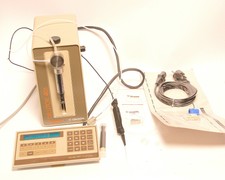
Gilson 401 Diluter Dispenser HPLC pump metering pump with accessories
Condition: Used
Location: Germany

€299.00
Rheodyne 7520 HPLC syring Loading Micro Sample Injector injection valve manually
Condition: Used
Location: Germany
€149.00
HPLC separation column column HPLC Column Macherey-Nagel CC125 / 2 Nucleodur 100-5 C8 ec
Condition: Used
Location: Germany
€149.00

€119.00
Waters WAT200460 PCM modules HPLC pump control module with IEEE 488 interface
Condition: Used
Location: Germany
.jpg)
£11,995.00





 Deutsch
 English
 Español
 Français
 Nederlands
 Polski
 Русский
 Українська